
Easy Seasonal Pickling Projects for Women 65+
Pickling is a simple way to enjoy seasonal produce long after it leaves the garden or farmers market. With a few fresh ingredients, vinegar, jars, and basic kitchen tools, you can make crisp vegetables, flavorful relishes, and sweet fruit pickles at home.
The easiest place to begin is with refrigerator pickles. They do not require special canning equipment and are stored in the refrigerator. If you later want to make shelf-stable jars, use a tested recipe and follow approved water-bath canning instructions carefully.
These projects are designed to be manageable, flexible, and enjoyable. Work at your own pace, choose smaller batches, and invite a friend or family member to join you.
Start With Simple Pickling Basics
Before beginning, gather:
– Clean glass jars with lids
– A stainless steel or enamel saucepan
– Measuring cups and spoons
– A cutting board and sharp knife
– Tongs or a jar lifter
– Vinegar with 5 percent acidity
– Pickling or canning salt
– Fresh produce and seasonings
For refrigerator pickles, clean jars thoroughly with hot, soapy water and rinse well. Keep the work surface tidy, and wash produce before cutting.
Use a reliable recipe, especially for shelf-stable pickles. Do not reduce the amount of vinegar, change the vinegar strength, or alter the proportions of vegetables and liquid in a canning recipe. These details help keep the finished food safe.
Spring: Pickled Radishes and Asparagus
Spring vegetables are colorful, crisp, and ideal for quick pickling. Radishes and asparagus both take on flavor quickly without requiring complicated preparation.
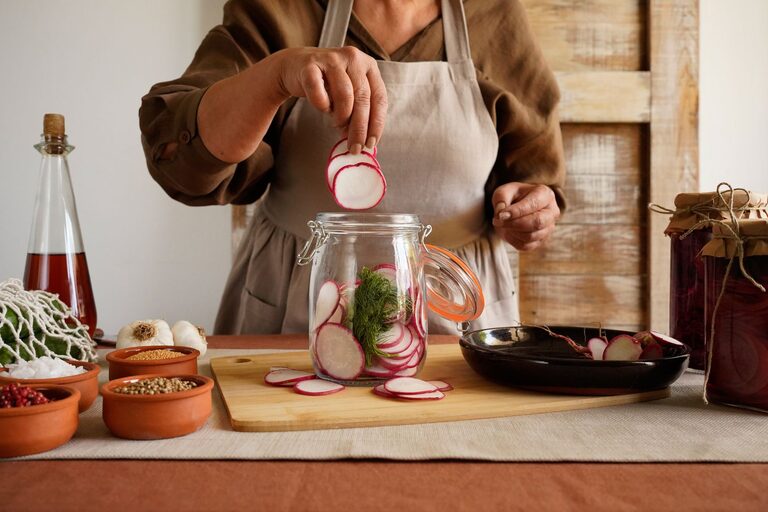
Quick Pickled Radishes
Slice a bunch of radishes thinly and place them in a clean jar. Add a few peppercorns, a small piece of garlic, or a sprig of fresh dill if desired.
Make a simple brine with:
– 1 cup vinegar
– 1 cup water
– 1 tablespoon sugar
– 1 teaspoon pickling salt
Warm the brine in a saucepan until the salt and sugar dissolve. Pour it over the radishes, leaving enough space for the vegetables to remain covered. Cool the jar, cover it, and refrigerate.
The radishes are often ready after a few hours and become more flavorful overnight. Use them on sandwiches, salads, tacos, or baked potatoes.
Pickled Asparagus
Trim the tough ends from fresh asparagus and cut the stalks to fit upright in a jar. Add lemon slices, dill, or a few mustard seeds for extra flavor.
Pour hot brine over the asparagus, let the jar cool, and refrigerate. For the best texture, enjoy these pickles within a week or two.
Summer: Classic Cucumber Pickles
Summer cucumbers are a natural choice for pickling. Small, firm cucumbers make especially good refrigerator pickles because they stay crisp.
Cut cucumbers into spears, slices, or coins. Add them to a jar with fresh dill, garlic, and a pinch of red pepper flakes if you enjoy mild heat.
Try this basic brine:
– 1 cup white vinegar
– 1 cup water
– 1 tablespoon sugar
– 1 tablespoon pickling salt
Bring the mixture to a gentle simmer, then pour it over the cucumbers. Let the jar cool before refrigerating. The pickles are usually ready in 24 hours, although the flavor improves over several days.
For better texture, choose cucumbers that are firm and not oversized. Keep them cold from the time you buy or harvest them until you begin preparing them.
A Small Batch Bread and Butter Style Pickle
For a sweeter option, combine sliced cucumbers and onions in a bowl. Sprinkle them lightly with salt and let them rest for about an hour. Rinse and drain them, then cover with a warm mixture of vinegar, sugar, and spices such as mustard seed and celery seed.
Refrigerate the pickles in a covered container. They make a pleasant addition to sandwiches, grilled foods, and cold salads.
Late Summer: Pickled Green Beans
Fresh green beans create a colorful pickle with a satisfying crunch. Trim the ends and cut the beans so they fit comfortably into jars.
Add garlic, dill, and a few peppercorns. Pour over a hot vinegar-and-water brine, then refrigerate after cooling.
Pickled green beans are easy to serve as a snack or side dish. They also make a cheerful addition to a simple lunch plate with cheese, crackers, and sliced fruit.
If you plan to preserve green beans as shelf-stable canned pickles, use a tested canning recipe rather than relying on a refrigerator pickle formula.
Fall: Pickled Onions and Carrots
Fall is a good time to pickle sturdy vegetables that are available in many grocery stores and markets.
Pickled Red Onions
Thinly slice one red onion and place it in a jar. Add a few peppercorns and a bay leaf if you like. Cover the onion with a hot brine made from equal parts vinegar and water, plus a little sugar and salt.
The onions will turn a bright pink color as they sit. They are usually ready within a few hours and can be used on sandwiches, grain bowls, salads, and roasted vegetables.
Pickled Carrots
Peel carrots and cut them into sticks or thin rounds. Blanch them briefly in boiling water if you prefer a softer texture, then cool them before placing them in jars.
Add ginger, dill, or a small piece of cinnamon stick for a different flavor. Cover with brine and refrigerate. Pickled carrots are especially useful for adding color and crunch to simple meals.
Winter: Pickled Fruit and Pantry Planning
Winter is a good season to use apples, pears, citrus, and stored vegetables. A sweet-and-sour fruit pickle can be made with firm apple or pear slices, vinegar, sugar, and warm spices such as cinnamon or cloves.
Keep the fruit pieces fairly large so they do not become too soft. Serve them with roasted meats, baked squash, cheese, or a simple grain dish.
Winter is also an excellent time to review your jars, labels, and equipment. Check that lids are clean, tongs are sturdy, and measuring tools are easy to read. Replace chipped jars or rusty equipment.
Tips for Comfortable Kitchen Work
Pickling does not have to be tiring. A few small adjustments can make the process easier:
– Choose recipes that make one or two jars at a time.
– Sit at a table for washing and slicing vegetables.
– Use a lightweight saucepan when possible.
– Prepare ingredients in stages instead of doing everything at once.
– Keep frequently used tools within easy reach.
– Use a jar funnel to reduce spills.
– Label each jar with the date and type of pickle.
– Ask for help lifting a large pot or moving hot jars.
A rolling cart can be useful for moving supplies, and a nonslip mat can help keep jars steady on the counter.
How to Store and Enjoy Your Pickles
Refrigerator pickles should remain covered with brine and stored in the refrigerator. Use clean utensils when removing food from the jar, and follow the storage time given in your recipe.
If a jar develops an unusual smell, mold, bubbling, or an unexpected appearance, discard it without tasting. When in doubt, throw it out.
Start with one seasonal project, then build a collection of favorites. Whether you choose spring radishes, summer cucumbers, fall onions, or winter fruit, pickling offers a practical and creative way to enjoy fresh ingredients throughout the year.
